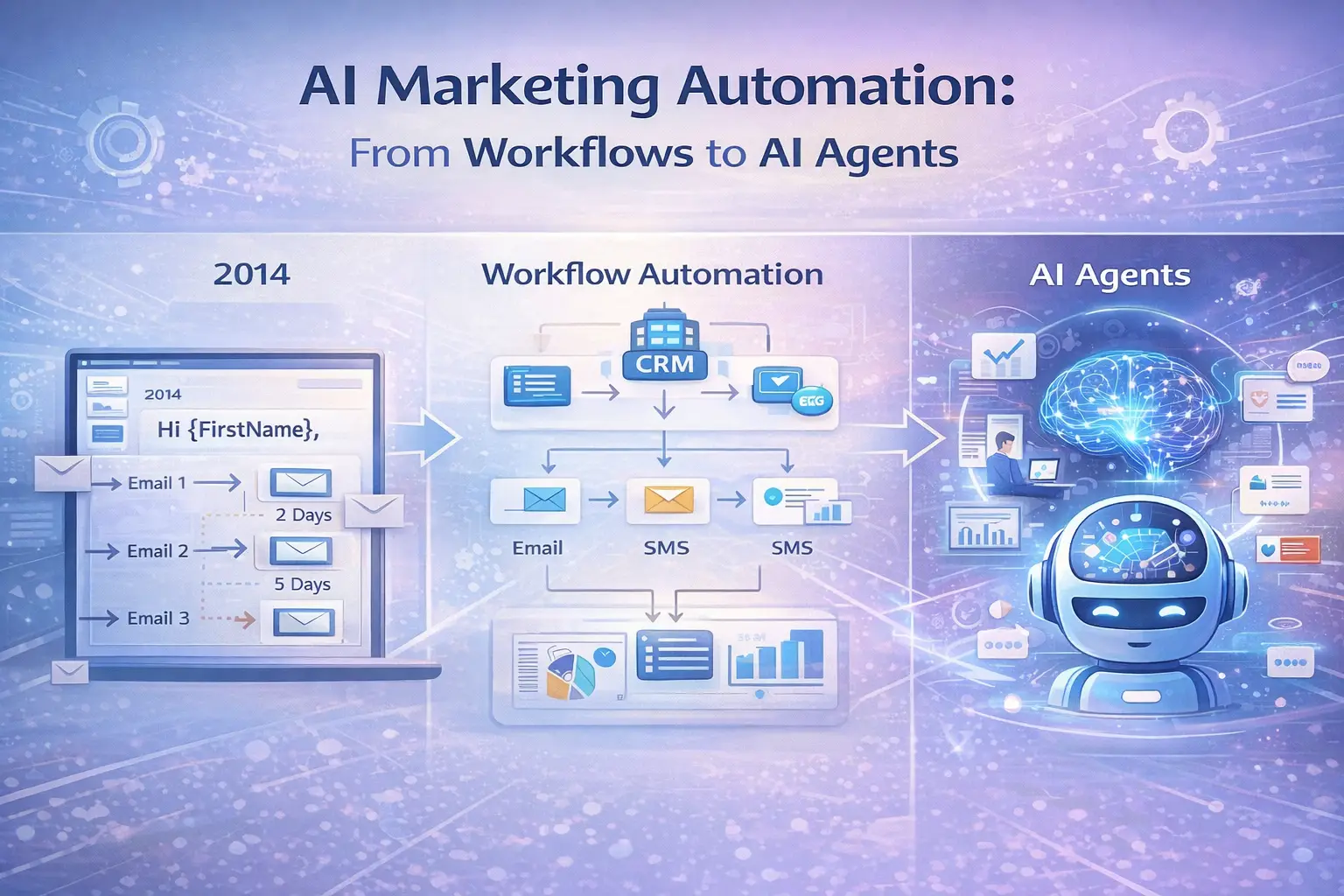
Back in 2014, when I started my journey in digital marketing at an agency, marketing automation workflows were extremely simple.

At that time, AI marketing automation didn’t exist.

Marketing automation meant:

  • Sending bulk emails
  • Scheduling seasonal campaigns
  • Adding basic delays between messages

If we inserted {FirstName} in an email, it felt revolutionary.

That was personalization.

There was no AI-driven customer journey orchestration, no behavioral intelligence, and definitely no AI agents in marketing.

Fast forward to 2026, and the landscape has completely transformed.

Today, marketing automation is powered by:

  • Artificial Intelligence
  • Customer Data Platforms (CDPs)
  • Real-time behavioral analytics
  • Autonomous AI agents

We can now:

  • Predict what customers want
  • Decide the best time to engage
  • Choose the right channel automatically
  • Deliver hyper-personalized experiences

This evolution—from simple workflows to AI marketing automation—has redefined how brands engage with customers.

What is AI Marketing Automation?

AI marketing automation refers to the use of artificial intelligence to automate marketing decisions, personalize customer experiences, and optimize campaigns using behavioural, transactional, and contextual data.

Unlike traditional marketing automation workflows, AI-driven systems can:

  • Learn from customer behavior
  • Predict intent
  • Adapt journeys dynamically
  • Recommend the next best action

This shift is transforming how brands interact with customers across email, web, mobile, and advertising channels.

2014: The Era of Basic Marketing Automation Workflows

In 2014, marketing automation was primarily email-based.

A typical campaign looked like:

User signs up → Wait 2 days → Send email → Wait 3 days → Send follow-up

The tools we used included:

  • Zapier
  • Basic CRM integrations
  • Email platforms like Mailchimp

Personalization Was Limited

We only had:

  • First Name
  • Last Name
  • Company Name

And yet, it worked.

Marketers relied heavily on:

  • Lead magnets
  • Email nurturing
  • Basic segmentation

This was the beginning of marketing automation workflows.

2026 and Beyond: The Rise of Structured Marketing Automation Workflows

As martech evolved, marketing automation workflows became more advanced.

Instead of simple emails, we started building multi-step customer journeys.

Examples:

  • Website visit → Product view → Abandoned cart → Email → SMS
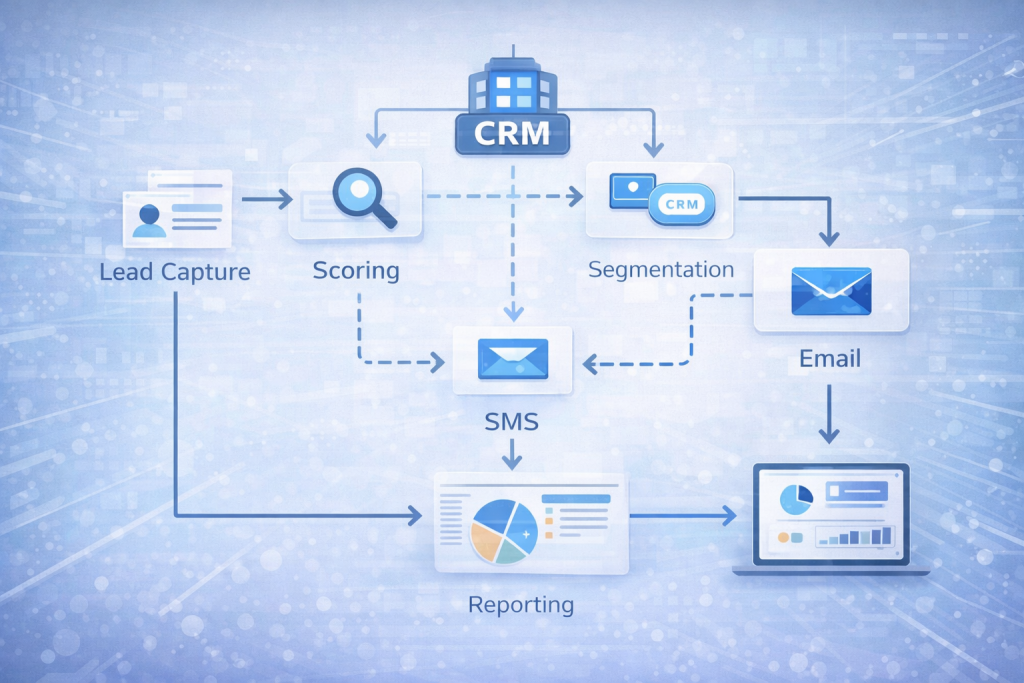
  • Lead capture → Scoring → Segmentation → Nurture campaigns

Platforms enabling this:

  • Adobe Journey Optimizer
  • Salesforce Marketing Cloud
  • HubSpot

These platforms introduced scalable marketing automation systems.

Why Workflows Still Dominate

Even today, enterprises rely on workflows because they are:

  • Reliable
  • Auditable
  • Compliance-friendly
  • Easy to debug

Limitations of Workflow-Based Automation

However, workflows have limitations:

  • Rigid logic
  • Hard to adapt
  • No real-time intelligence

Customers behave unpredictably, and workflows struggle to keep up.

This led to the rise of AI-driven marketing automation.

AI in Marketing Automation: 3 Stages of Evolution

Most organizations today fall into three categories of AI adoption in marketing:


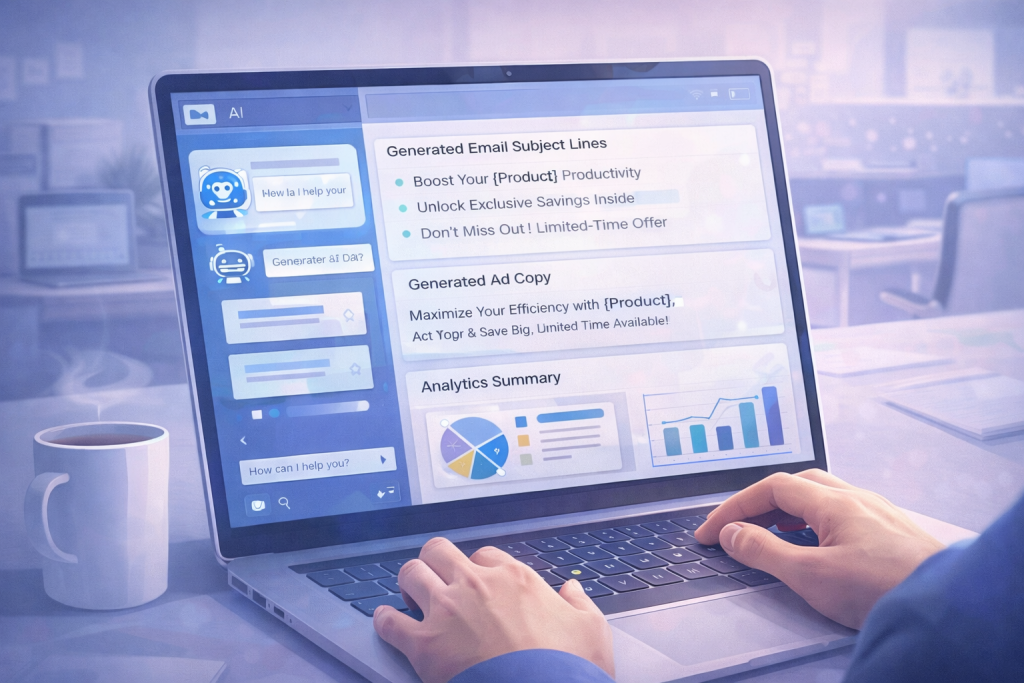
1. AI Marketing Assistants (Single LLM Use Cases)

ai-chat-assistants-martech

The first wave of AI marketing automation came through single LLM tools.

These tools help with:

  • Content creation
  • Copywriting
  • Campaign analysis

Common Use Cases

  • Email subject lines
  • Ad copy generation
  • Blog writing
  • Performance summaries

These tools follow a simple flow:

Input → AI → Output

📊 Industry Data & References

  • According to , over 60% of marketers say AI improves productivity
  • AI tools also help reduce content costs and improve personalization (industry-wide studies)

Benefits

  • Fast
  • Cost-effective
  • Easy adoption

Limitations

  • No memory
  • No contextual awareness
  • Not autonomous

These tools are assistants—not full AI marketing automation systems.


2. Structured AI Marketing Automation Workflows

ai-marketing-automation-workflows

The second stage combines workflows with AI.

This is where most enterprises are today.

Example:

Website visit → Abandoned cart → AI-powered recommendation → Email

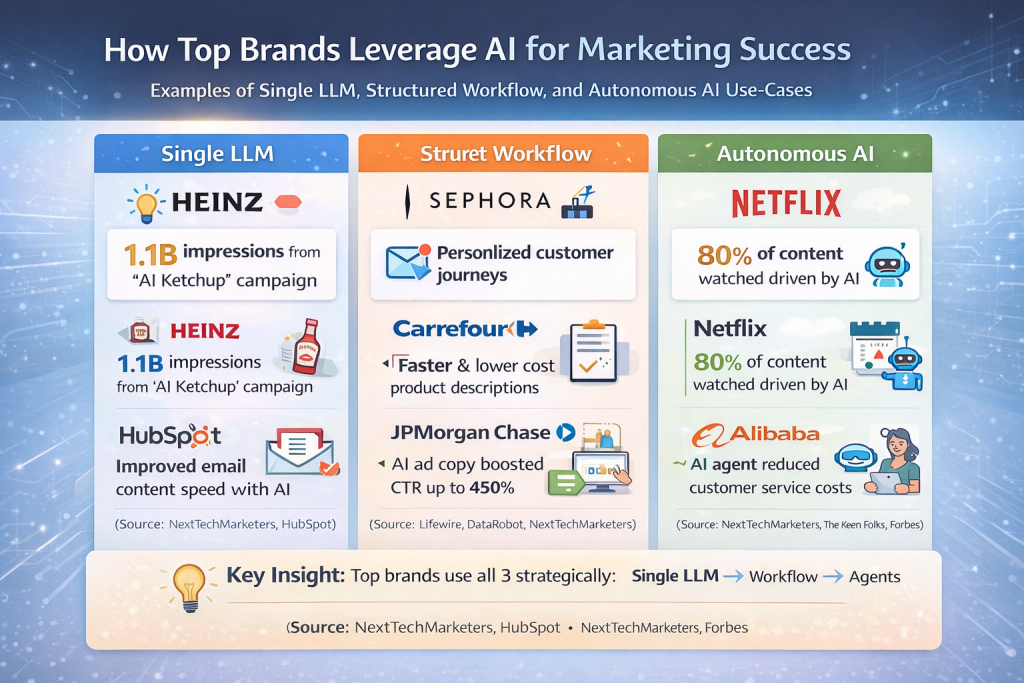
📊 Real-World Examples & References

  • Sephora’s Virtual Artist improved customer engagement and sales
  • Showcases companies like Amazon, Netflix leveraging AI
  • Highlights increasing AI adoption across industries

📊 Key Statistic

✔️ “Amazon’s AI recommendation engine contributes to nearly 35% of total revenue.” (Industry studies)

Benefits

  • Scalable
  • Predictable
  • Compliance-friendly

This is the most widely adopted form of AI-driven marketing automation today.


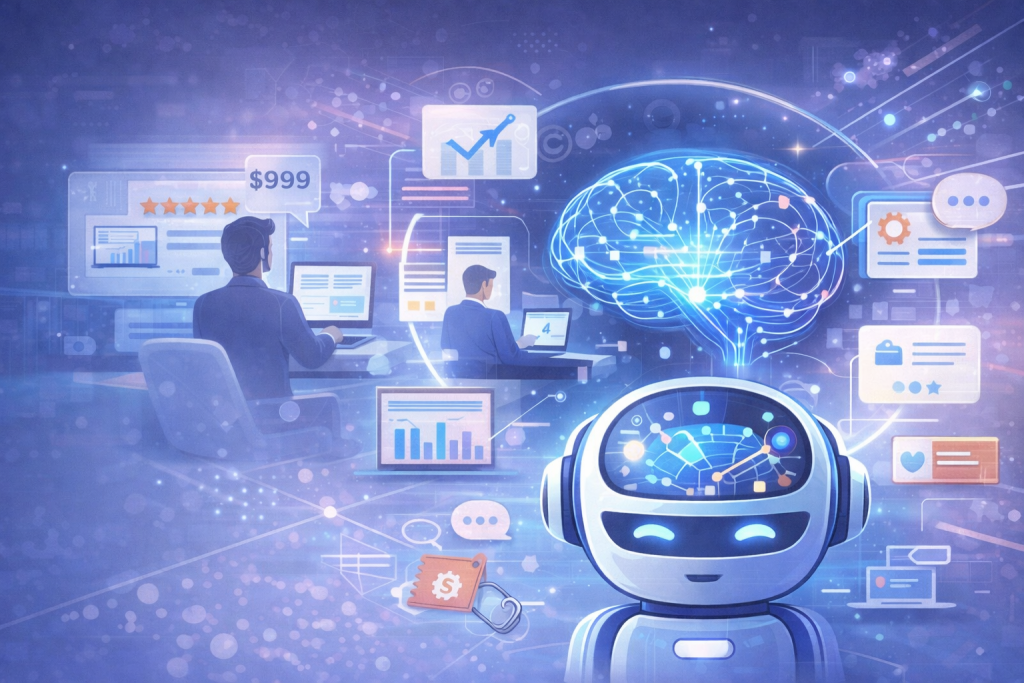
3. Autonomous AI Agents in Marketing

ai-driven-marketing-decision-making-process

The third stage is the most advanced:

👉 AI agents in marketing

These systems don’t follow predefined workflows.

Instead, they:

  • Understand intent
  • Learn continuously
  • Adapt in real time
  • Make decisions autonomously

Example Scenario

Customer browsing laptops:

Traditional workflow:
→ Send abandoned cart email

AI agent approach:

  • Show comparison guide
  • Offer financing
  • Trigger chatbot
  • Send personalized discount

📊 Industry Examples & References

  • 80% of content watched comes from AI recommendations
  • AI drives ~35% revenue
  • Generated 1.15B impressions

These are examples of agent-like AI systems that continuously optimize customer experiences.

AI Agents vs Marketing Automation Workflows

Here is a simple comparison

FeatureMarketing WorkflowsAI Agents
LogicPredefined rulesDynamic learning
AdaptabilityLowHigh
PersonalizationRule basedBehavioral
Decision makingHuman definedAI driven
Customer understandingLimitedContextual

AI agents represent a major leap forward in marketing intelligence.

But they are not replacing workflows completely.

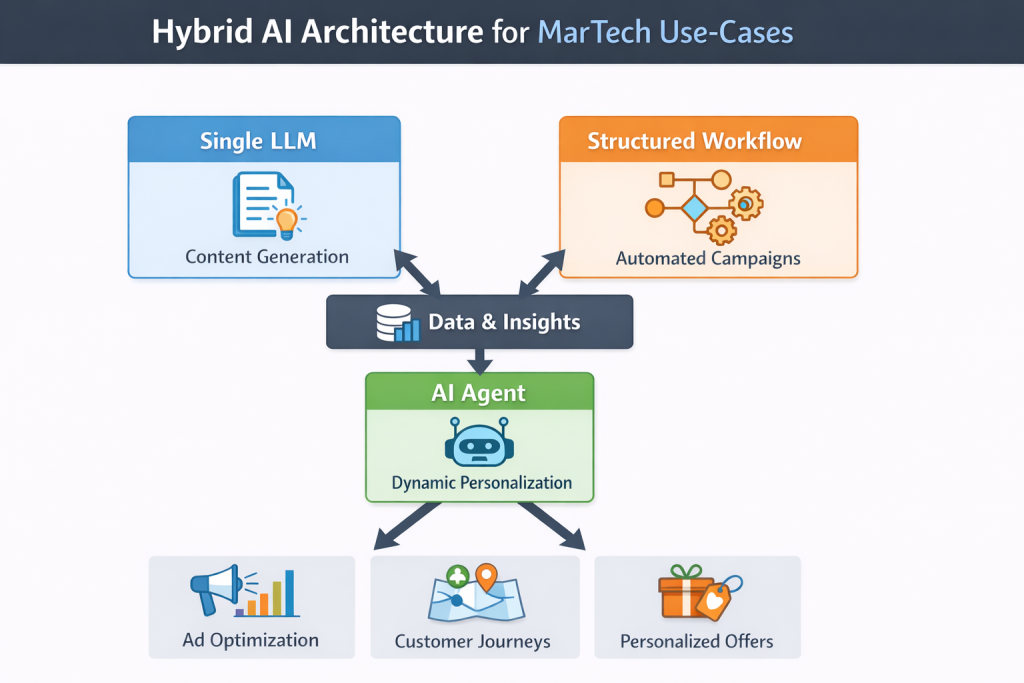
Hybrid AI Marketing Automation: The Real Enterprise Model

In reality, companies use a hybrid model.

This includes:

  • Marketing automation workflows
  • AI assistants
  • Autonomous AI agents

A modern martech stack includes:

  • CRM
  • CDP
  • AI engines
  • Journey orchestration tools

Why Hybrid Works

It balances:

  • Efficiency
  • Control
  • Adaptability


The Future of AI Marketing Automation

Marketing automation has evolved dramatically.

We have moved from:

  • Email delays
  • Workflow automation
  • AI-powered personalization
  • Autonomous AI agents

But the core mission of marketing remains unchanged:

Deliver the right message, to the right person, at the right time.

The tools may evolve, but the goal stays the same.

Final Thoughts

Marketing automation has come a long way since the days of “Hi {FirstName}” emails.

From simple email campaigns to AI-driven customer journey orchestration, the evolution has reshaped the marketing landscape.

If you’re working in marketing or martech, ask yourself:

  • How has automation evolved in your organization?
  • Are you experimenting with AI agents yet?
  • Or are you still optimizing marketing automation workflows?

I’d love to hear your experiences.

Share your thoughts in the comments.


References

📌 1️⃣ Single LLM Use-Case References (Content & Copy)
📌 2️⃣ Structured Workflow AI References (Marketing Automation)

While specific structured workflow examples like Sephora’s journeys aren’t always published in single case studies online, these sources strongly validate the general use of AI in marketing automation and personalization:

📌 3️⃣ Autonomous / Agent-like AI Personalization References

Here are sources showing large brands using real-time, adaptive AI systems — often beyond simple workflow triggers:

Show CommentsClose Comments

Leave a comment

This site uses Akismet to reduce spam. Learn how your comment data is processed.